
Platform · Operations
Five steps, one chain.
Each step builds on the previous one. Select a step to see what it records, which evidence is linked to it, and which areas contribute.
AreasRooms, equipment, instruments
- Records
- Rooms, equipment and instruments with status, defined inspection, maintenance and calibration intervals, and linked evidence.
- Evidence documented
- Is the area, including its equipment and instruments, suitable, maintained and, where required, calibrated?EU GMP Part I, Chapter 3; Annex 15 where qualification and validation are concerned
- In the chain
- Starting point → Areas → every further step takes place in an area
- Works with
- Work (inspection, maintenance and calibration tasks with SOPs), Organization (documents and evidence), Finance (purchase records), Administration (change records)
- Expansion (optional)
- Environmental monitoring via sensors and an IoT gateway; equipment labeling
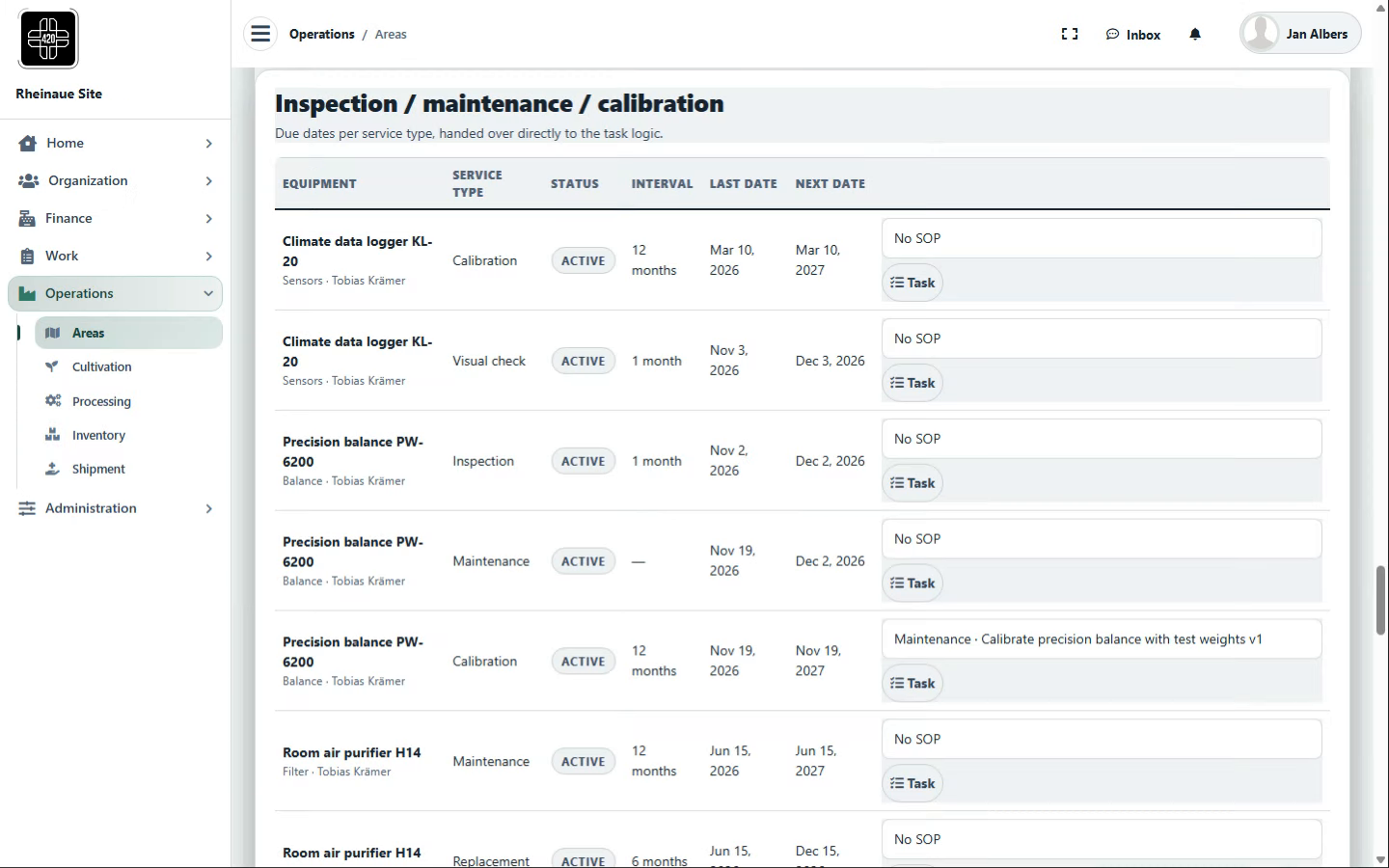
Contributing areas
CultivationBatches with origin and phases
- Records
- Batches with documented origin of the starting material, defined phases and assigned tasks.
- Evidence documented
- Is the origin of the starting material traceable, and are the activities assigned to each phase documented?The applicable EMA guideline on Good Agricultural and Collection Practice (GACP) for starting materials of herbal origin
- In the chain
- Area → Cultivation → harvest as the first lot
- Works with
- Work (checks and watering activities as tasks), Organization (supplier as a business partner and proof of origin), Home (role-based views of open tasks), Administration (phase changes in the change log)
- Expansion (optional)
- Image-based checks; process mining across documented batch histories
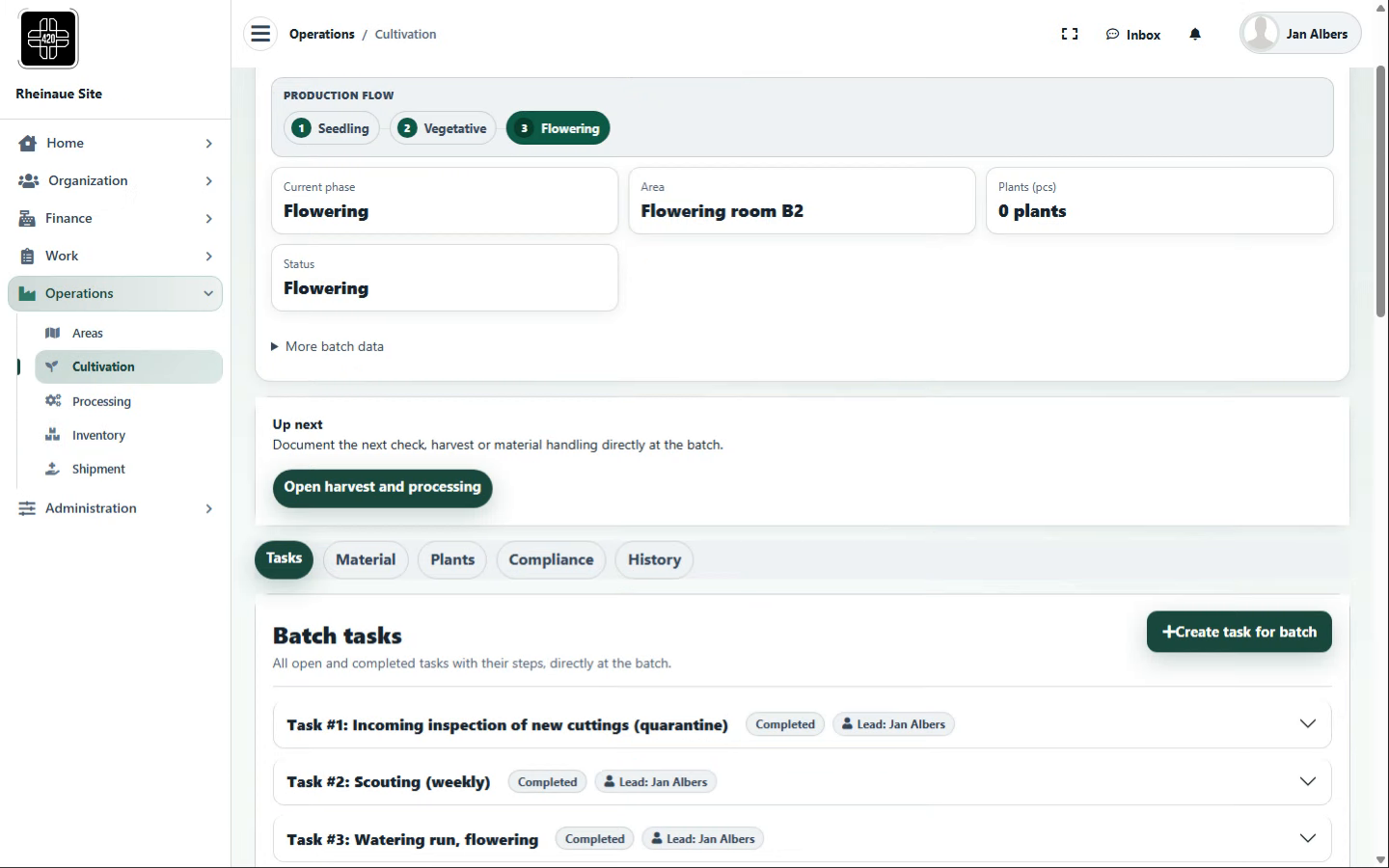
Contributing areas
ProcessingLots, testing, release
- Records
- Lots, follow-on lots, packed units and residues with linked origin and documented quantities, together with testing, release and lock statuses.
- Evidence documented
- What was made from which lot, which tests are documented, and which status is recorded for further use?EU GMP Part I, Chapters 4, 5 and 6
- In the chain
- Harvest → Processing → released packed units
- Works with
- Work (processing and testing activities as tasks), Administration (laboratory, status and change documentation), Home (processing or viewing by the responsible role)
- Expansion (optional)
- Additional processing methods; risk-based review of defined exceptions
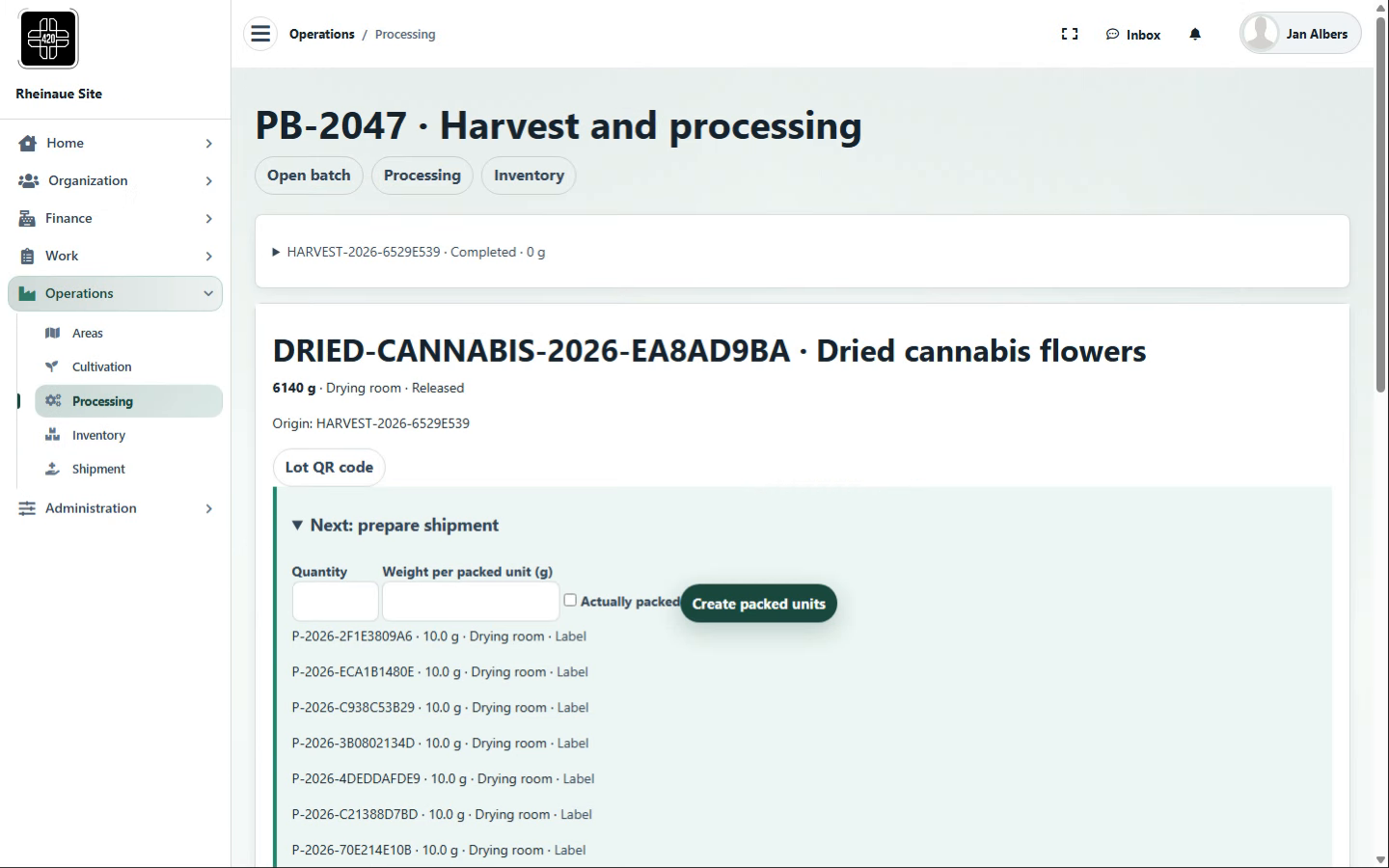
Contributing areas
InventoryStock and consumption
- Records
- Lots and materials in stock, with bookings linked to documented creation and consumption events.
- Evidence documented
- What is where, which lot or material is it assigned to, and how was it used?EU GMP Part I, Chapters 4 and 5; § 7 AMWHV, where storage and transport are concerned
- In the chain
- Processing, goods receipt → Inventory → Shipment
- Works with
- Work (consumption recorded at the task, alongside the target value), Finance (purchasing and receipts), Organization (products and specifications)
- Expansion (optional)
- Barcode or RFID capture where it supports more efficient recording
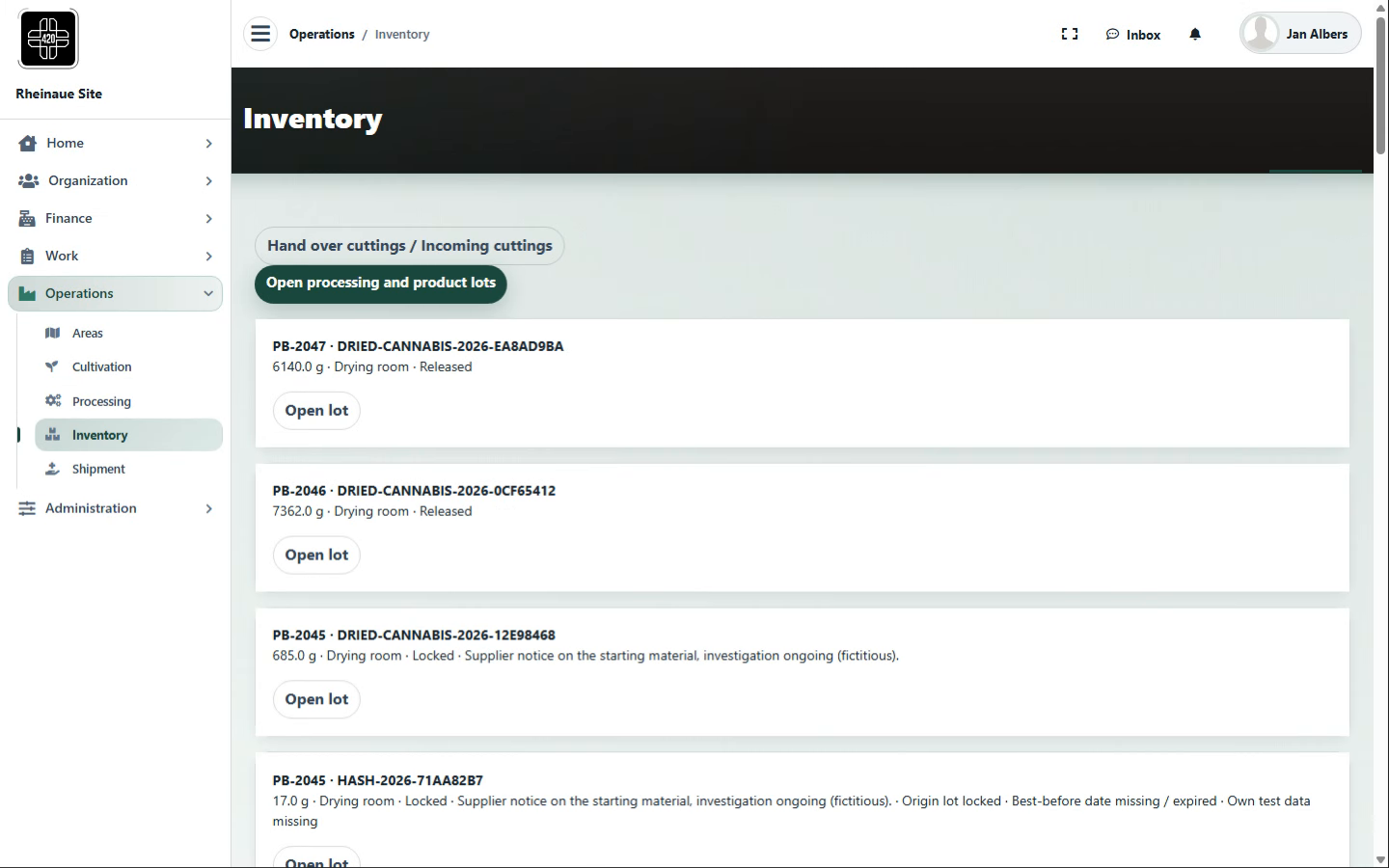
Contributing areas
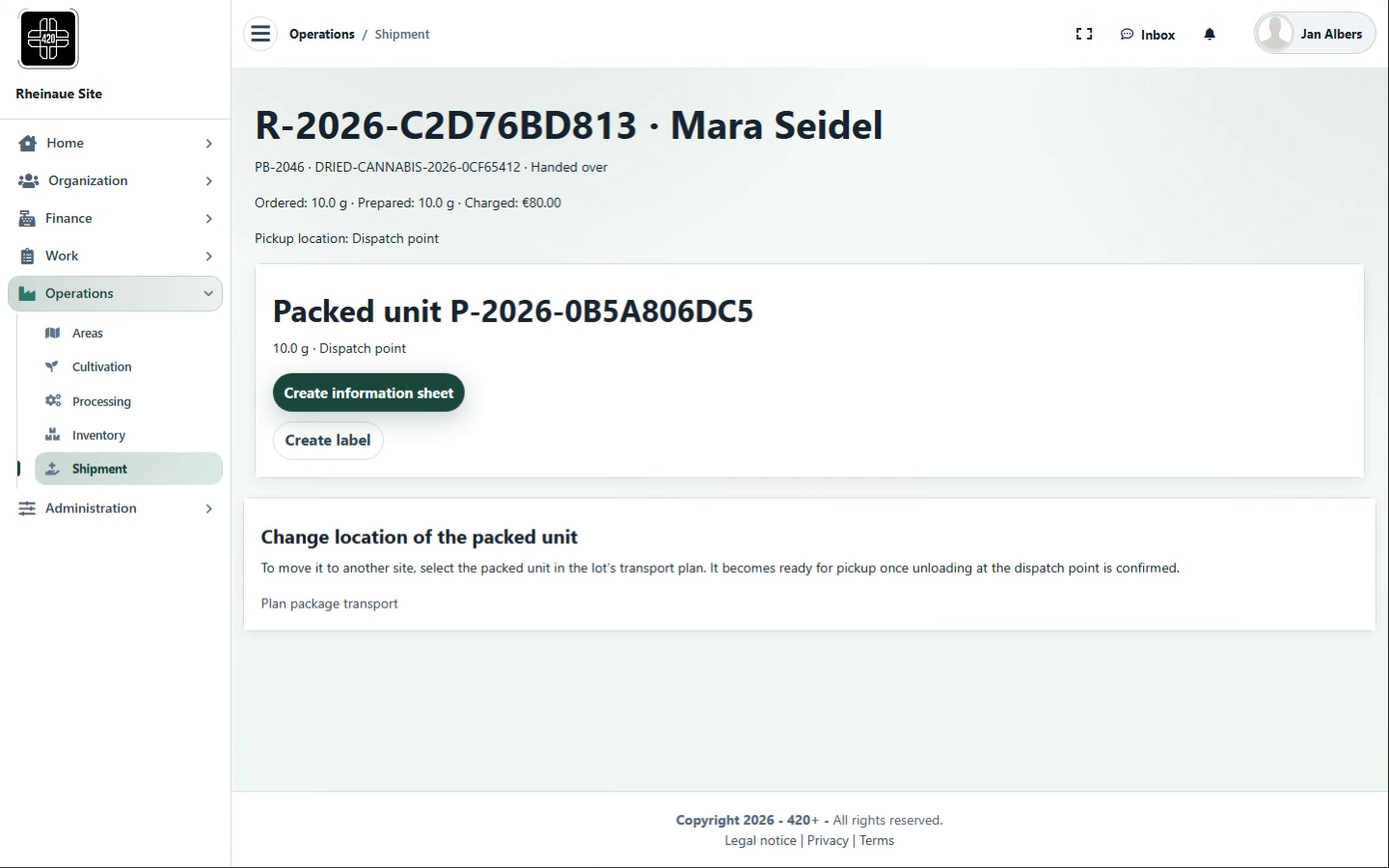
ShipmentOrders and shipments
- Records
- Orders and shipments, linked to the lots and packed units used to fulfill them.
- Evidence documented
- Where did each unit go, and do the documented links support traceability or a recall?EU Guidelines on Good Distribution Practice (GDP), where applicable
- In the chain
- Inventory → Shipment → customer
- Works with
- Organization (recipient as a business partner), Administration (recall documentation and reports), Finance (invoice for the order)
- Expansion (optional)
- Transport records; traceability and recall across the documented chain
Contributing areas
Workflows, roles, review requirements and links are configurable per site and process; regulatory suitability depends on use, configuration, validation, site procedures and assigned responsibilities at each site.
Original screenshots from the demo instance with fictional data; the screenshots are for illustration and do not represent a complete GxP process.
The screenshots show 420+ using a fictional cannabis operation as an example, with fictional process data. The workflows shown may also serve as examples for other regulated sectors. This is not advertising for cannabis or cannabis cultivation associations and does not indicate any licence, approval or regulatory recognition.